 Dinner Ideas Weekly
Spaghetti Carbonara in 30 Minutes
Classic spaghetti carbonara with crisp pancetta, black pepper and a creamy egg-and-Pecorino sauce. It has no cream, needs 5 main ingredients and takes 30 minutes.
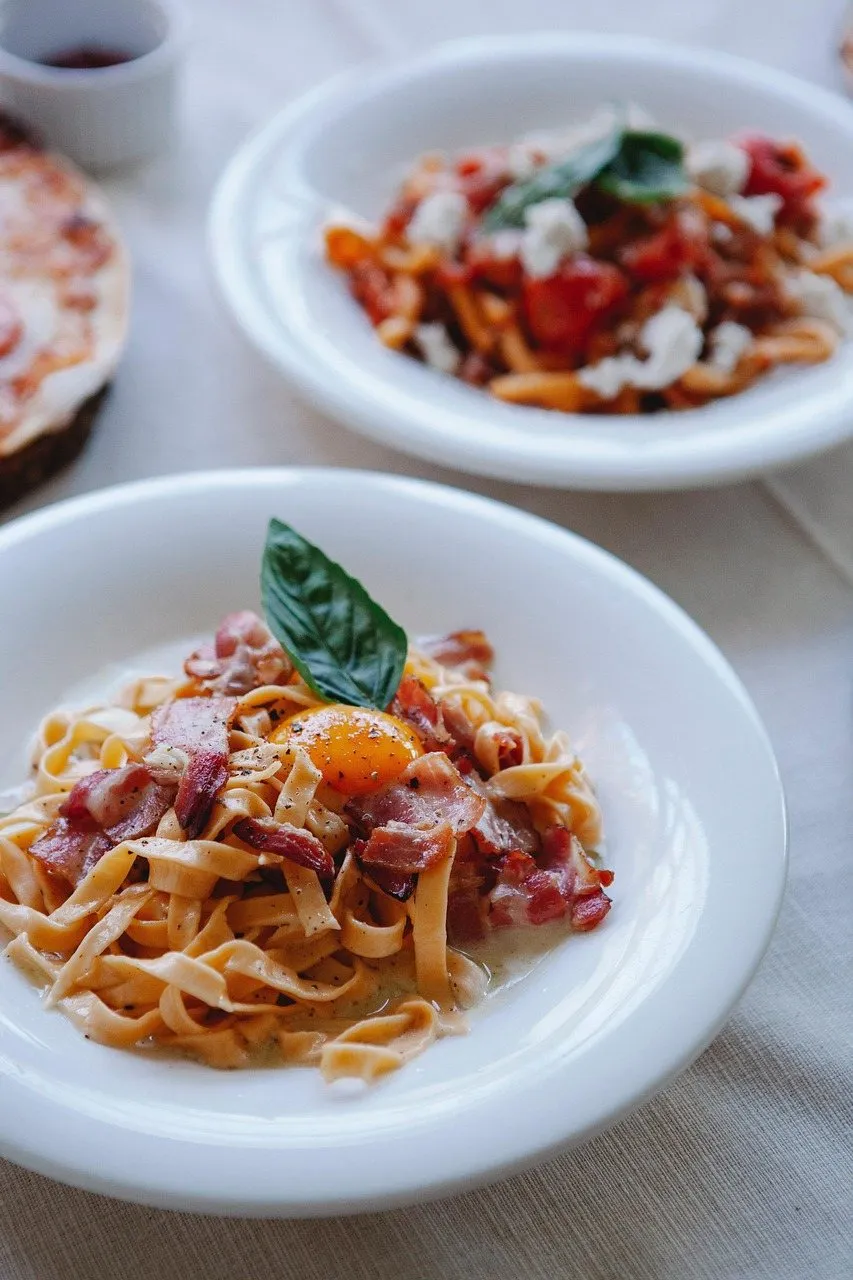
This is spaghetti carbonara with crisp pancetta and plenty of black pepper. Eggs, cheese and starchy pasta water turn into a creamy sauce that coats every strand, with no cream involved. It takes 30 minutes and five main ingredients, most of which keep for weeks in the fridge or pantry.
The one thing that matters is heat control. The eggs need to thicken into a sauce without turning into scrambled eggs. This version mixes the eggs and cheese into a thick paste first, then tosses everything off the heat with hot pasta water. The method is easy to repeat once you've seen it work.
Why this recipe works
Carbonara sauce is an emulsion. Egg yolks, rendered pork fat, finely grated cheese and starchy pasta water all bind together. Yolks thicken at about 150°F and whole eggs scramble not far above that, so the margin is small. Taking the skillet off the burner and letting it cool for about a minute keeps you inside that window.
Extra yolks make the sauce richer and help it cling. Whites alone tend to set into rubbery bits. Two whole eggs plus three yolks gives you enough volume for a pound of pasta without the sauce tasting eggy.
Pasta water is the other half of the sauce. Cooking the spaghetti in a smaller amount of well-salted water makes the water starchier, and that starch is what keeps the sauce smooth instead of greasy.
Ingredient notes
Pork: Guanciale (cured pork cheek) is the Roman original and has the most fat to render. Pancetta is easier to find and works very well. Thick-cut bacon also works, but it adds a smoky flavor. If you use bacon, pour off some of the fat so the sauce isn't greasy.
Cheese: Pecorino Romano is sharp and salty. Parmesan (Parmigiano Reggiano) is milder and nuttier. I like a half-and-half mix because pure Pecorino can taste aggressively salty with pancetta. Grate the cheese on the fine side of a box grater or a Microplane, and skip the pre-shredded kind. Its anti-caking coating stops it from melting smoothly and leaves the sauce grainy.
Eggs: Use large eggs at room temperature. Cold eggs cool the pasta too quickly and the sauce stays thin. Set them on the counter while the water heats, or put them in a bowl of warm tap water for 5 minutes.
Pepper: Grind it coarsely and use a lot. It's one of the main flavors here, not just seasoning.
How to make spaghetti carbonara
Start the pasta water and the pancetta at the same time. While the pork renders over medium heat, whisk the eggs, yolks, cheese and pepper into a thick paste. It should look like loose cookie dough. A thick mixture melts into the pasta more evenly than a runny one.
When the spaghetti is a minute short of al dente, scoop out 1 1/2 cups of the cooking water. Then transfer the pasta straight into the skillet with the pancetta. Toss it in the fat over low heat for 30 seconds so the strands pick up the flavor. Take the pan off the burner and let it sit for about 60 seconds.
Loosen the egg paste with a few tablespoons of hot pasta water, pour it over the spaghetti and toss constantly with tongs. Add more pasta water a splash at a time. In about a minute the sauce should turn thick and glossy and cling to the pasta. It should flow slowly when you tilt the pan, not pool at the bottom. Serve right away, because carbonara keeps thickening as it sits.
Common mistakes (and how to fix them)
Scrambled eggs: The pan was too hot. Always add the eggs off the heat, after the pan has cooled for a minute. If you see small curds, add 2 tablespoons of pasta water right away and toss hard. Minor curdling usually smooths out.
Thin, runny sauce: The pan was too cool or there was too much water. Set the skillet over the lowest heat for 15 to 20 seconds while you toss constantly, then take it off again. Repeat until the sauce thickens.
Clumpy cheese: The cheese was coarse or pre-shredded, or it went into a pan that was too hot. Grate it finely and mix it into the eggs first, never directly onto the pasta.
Too salty: Pecorino, pancetta and pasta water all bring salt. Use about 1 tablespoon of salt for 4 quarts of water instead of the usual amount, and don't add any salt to the egg mixture.
Sauce that sets into a clump at the table: Carbonara waits for no one. Warm the bowls with a little hot pasta water and plate the pasta as soon as it's sauced.
What to serve with spaghetti carbonara
Carbonara is rich, so serve it with something bright or green. An arugula salad with lemon juice, olive oil and shaved Parmesan cuts through the fat. Roasted broccoli or asparagus (425°F for 12 to 15 minutes) adds a vegetable without much extra work. Sautéed spinach with garlic is ready in 5 minutes. If you want bread, a few slices of toasted ciabatta are plenty.
Tips for success
- Set a mug next to the stove so you don't forget to save pasta water. Once it goes down the drain, the sauce can't come together.
- Warm your serving bowls with a ladle of pasta water and pour it out just before plating. Carbonara thickens fast on cold plates.
- Use tongs and lift the pasta while you toss. The air and movement help the sauce turn creamy.
- If you plan to cut the recipe in half, keep at least 1 whole egg plus 2 yolks so there's enough sauce to emulsify.
- Use pasteurized eggs (sold in cartons or marked on the shell) if you're cooking for pregnant women, young children, older adults or anyone with a weakened immune system.
Substitutions
- Fettuccine, tagliatelle or rigatoni instead of spaghetti: all work the same way. Flat noodles hold a bit more sauce.
- Thick-cut bacon instead of pancetta: tastes smoky rather than purely porky. Pour off all but about 3 tbsp of the fat.
- Turkey bacon: works, but it renders very little fat. Add 2 tbsp olive oil to the skillet and expect a leaner, less rich sauce.
- Parmesan instead of Pecorino: gives a milder, less salty sauce. You may want a pinch more salt at the end.
- Gluten-free spaghetti: works well. Corn-and-rice blends release less starch, so save extra pasta water and add it more slowly.
- Dairy-free: no cheese swap gives the same result. Nutritional yeast plus a little extra yolk makes a passable version, but it won't taste like the original.
- Vegetarian: replace the pork with 8 oz sliced mushrooms browned in 3 tbsp butter or olive oil until crisp at the edges, about 8 minutes.
Storage and reheating
Carbonara is best eaten fresh. Refrigerate leftovers in an airtight container within 2 hours and eat them within 3 to 4 days. To reheat, put the pasta in a skillet with 2 to 3 tbsp water or milk and warm it over low heat, tossing often, until it reaches 165°F. The sauce will be thicker and a little firmer than the first day. A microwave also works at 50% power in 30-second bursts with a splash of water. Freezing isn't recommended because the egg sauce turns grainy when it thaws.
Make ahead
Up to 2 days ahead, grate the cheese and cut the pancetta, then store them separately in the fridge. You can also render the pancetta ahead and refrigerate it with its fat, then rewarm it in the skillet while the pasta cooks. Mix the eggs and cheese up to 1 hour ahead, cover the bowl and let it come to room temperature. Cook the pasta and toss the sauce only right before serving.
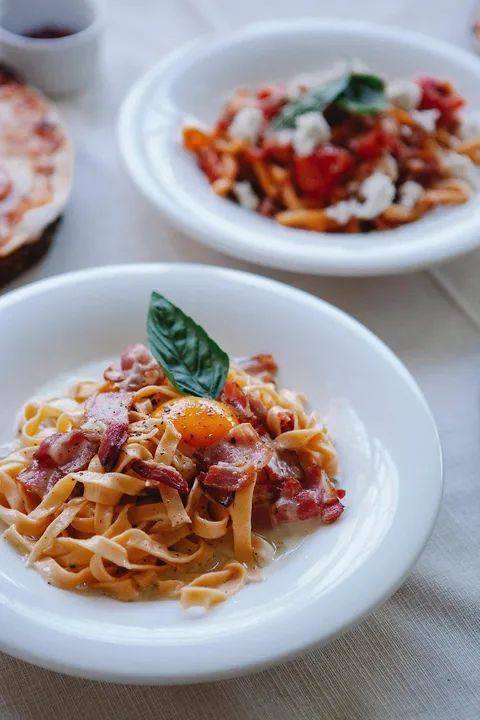
Spaghetti Carbonara in 30 Minutes
Classic spaghetti carbonara with crisp pancetta, black pepper and a creamy egg-and-Pecorino sauce. It has no cream, needs 5 main ingredients and takes 30 minutes.
- Prep
- 10 mins
- Cook
- 20 mins
- Total
- 30 mins
- Servings
- 4 servings
Ingredients
Instructions
- Bring 4 quarts of water to a boil in a large pot and add 1 tbsp kosher salt.
- Meanwhile, put the olive oil and pancetta in a cold 12-inch skillet. Set it over medium heat and cook, stirring occasionally, until the fat has rendered and the edges are golden and crisp, 8 to 10 minutes. Turn off the heat and leave the pancetta and its fat in the pan.
- In a medium bowl, whisk the eggs, egg yolks, grated cheese and black pepper into a thick paste with no dry cheese left.
- Cook the spaghetti 1 minute less than the package says for al dente, usually 8 to 9 minutes, stirring in the first minute so the strands don't stick.
- Scoop out 1 1/2 cups of the pasta water. Use tongs to move the spaghetti straight into the skillet with the pancetta.
- Turn the skillet to low and toss the spaghetti in the fat for 30 seconds. Take the pan off the heat and let it sit for 60 seconds so it is hot but not sizzling.
- Whisk 3 tbsp of the hot pasta water into the egg mixture, then pour it over the spaghetti. Toss constantly for 1 to 2 minutes, adding pasta water 2 tbsp at a time, until the sauce is thick and glossy and coats the pasta. If it stays thin, set the pan over the lowest heat for 15 seconds at a time while tossing.
- Serve immediately in warm bowls with more grated cheese, black pepper and a basil or parsley leaf if you like.
Equipment
- Large pot
- 12-inch skillet
- tongs
- fine grater
Nutrition (per serving)
- Calories
- 725 kcal
- Protein
- 33 g
- Carbs
- 81 g
- Fat
- 29 g
- Fiber
- 3 g
- Sodium
- 1380 mg
Nutrition values are estimates per serving and change with brands and portion sizes.
Dinner Ideas Weekly · https://dinnerideasweekly.com/blog/spaghetti-carbonara
Frequently asked questions
Does spaghetti carbonara have cream in it?
Traditional carbonara doesn't use cream. Eggs, finely grated cheese, rendered pork fat and starchy pasta water make the sauce creamy. Adding cream makes the sauce heavier and dulls the pepper and Pecorino flavors.
Are the eggs in carbonara cooked?
The eggs are gently cooked by the hot pasta and pan, usually to around 145 to 150°F. That's enough to thicken them, but it's below the 160°F that fully cooks eggs. If you're cooking for someone pregnant, very young, older or immunocompromised, use pasteurized eggs.
Why did my carbonara scramble?
The pan was too hot when the eggs went in. Take the skillet off the heat, wait about 60 seconds, then add the egg mixture thinned with a little pasta water. Keep tossing, and add more pasta water if you see curds forming.
Can I use bacon instead of pancetta?
Yes. Thick-cut bacon works and many American versions use it. It adds a smoky flavor and renders more fat, so pour some off before adding the pasta.
Can you reheat or freeze carbonara?
You can reheat it gently in a skillet with a splash of water until it reaches 165°F. The texture will be firmer than when fresh. Don't freeze it, because the egg sauce separates and turns grainy when thawed.