 Dinner Ideas Weekly
Skillet Lasagna in 45 Minutes
Beefy, cheesy lasagna layered and simmered in one 12-inch skillet. The dry noodles cook in the sauce, so there's no boiling pot and no oven.
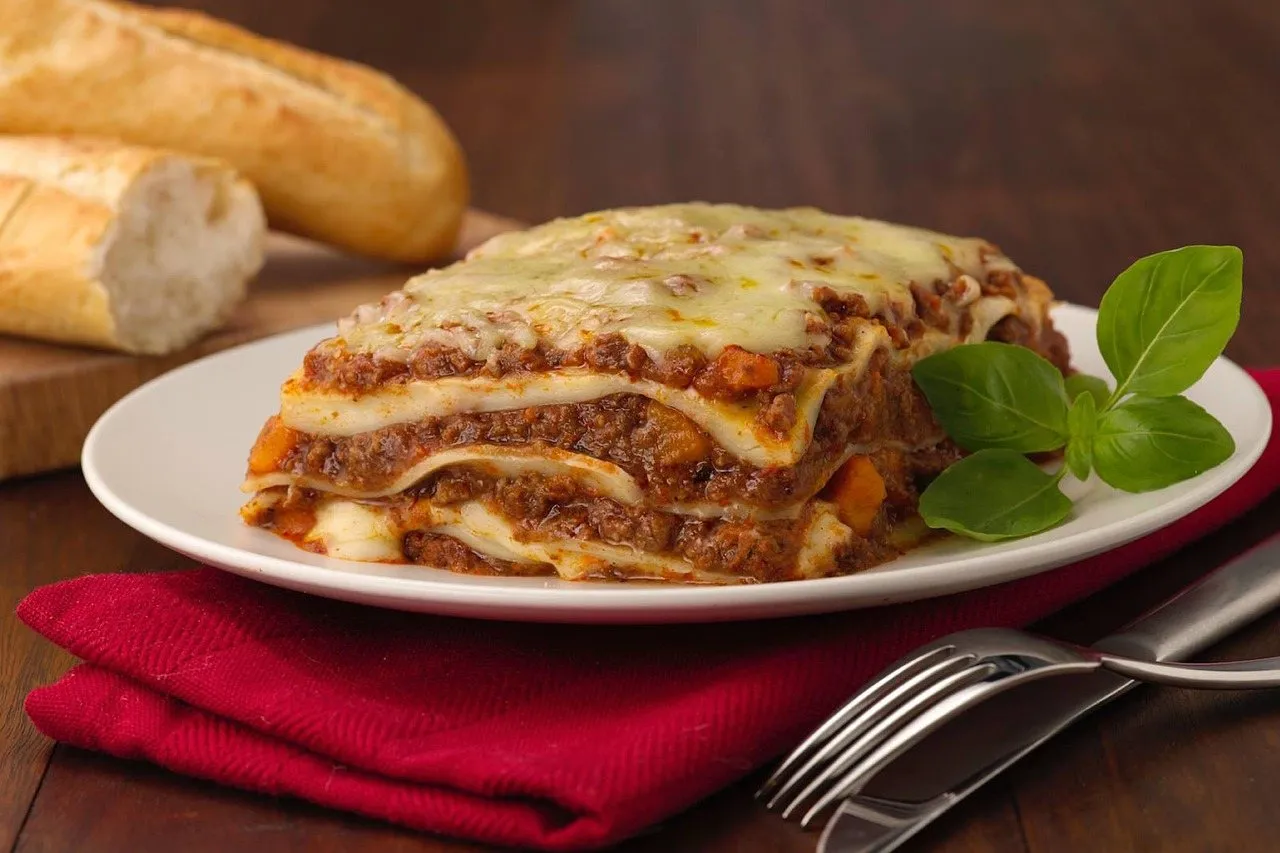
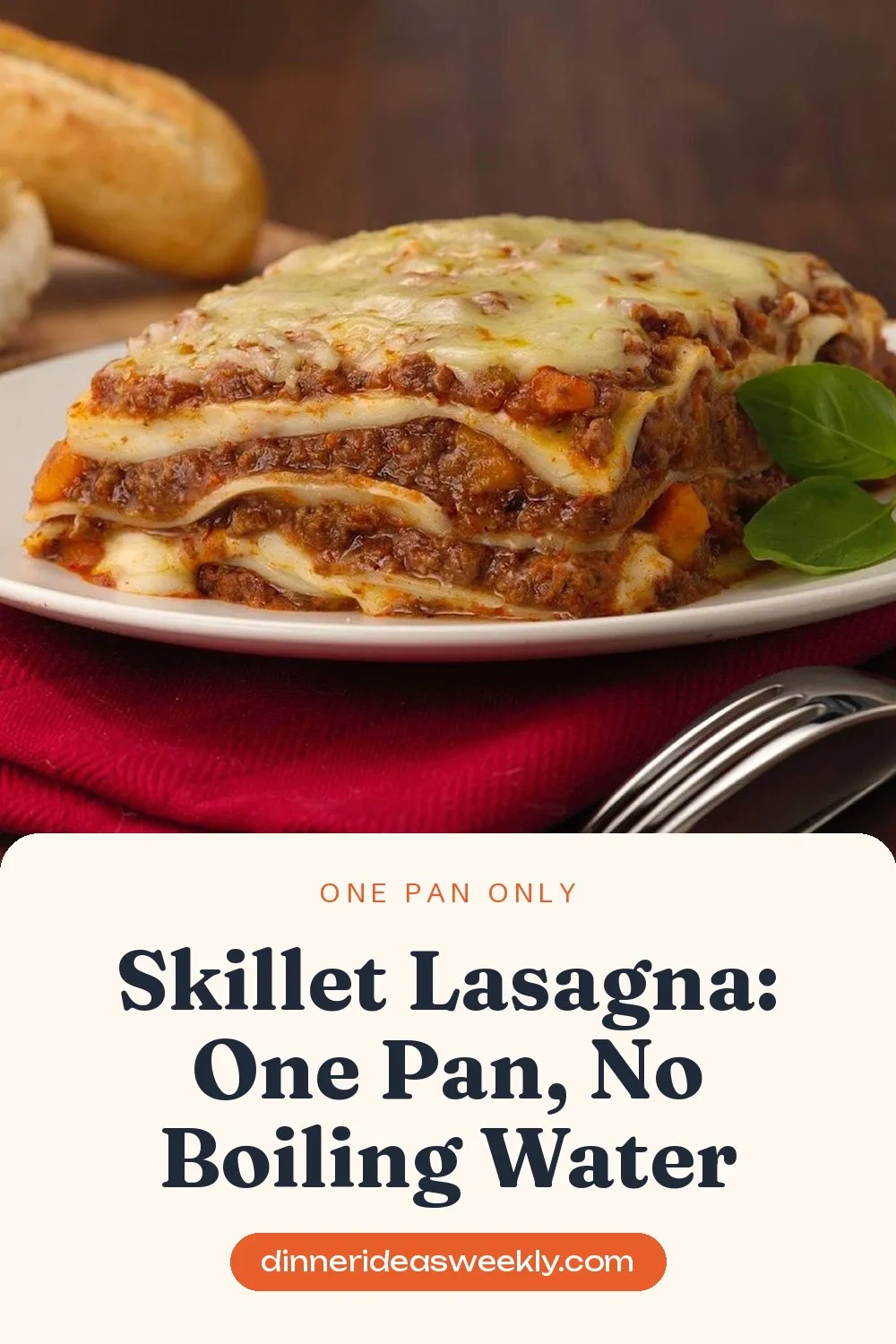
This lasagna has tender noodles, a beefy tomato sauce and a cap of melted mozzarella, and it's made from start to finish in one 12-inch skillet in about 45 minutes. You slice it into wedges and serve it straight from the pan.
Dry lasagna noodles go into the pan uncooked and simmer under a lid in a sauce thinned with water. They soak up the liquid and turn tender, and the starch they release thickens the sauce. You skip the pot of boiling water, the oven and the hour-long bake, and you still get real layers.
Why this recipe works
The ratio matters most. Dry pasta soaks up about twice its weight in liquid, so 8 ounces of noodles need around 2 cups of extra liquid beyond what makes a good sauce. A 24-ounce jar of marinara plus 1 1/2 cups of water gets you there, and you end up with saucy layers instead of dry, chalky edges.
Breaking the noodles into 2- to 3-inch pieces lets them lie flat in a round pan and overlap like shingles, which gives you clean layers when you cut a wedge. The lid traps steam, so the top layer cooks as evenly as the bottom.
The ricotta goes on in spoonfuls instead of being spread. The dollops stay creamy, and the sauce can bubble up between them to reach the noodles underneath.
Ingredient notes
Noodles: use regular dry lasagna noodles, curly-edged or flat. No-boil (oven-ready) noodles work too, but they're thinner and soak up liquid faster, so cut the water to 3/4 cup and check them after 12 minutes.
Ground beef: 85% lean has enough fat for flavor and leaves very little to drain. With 80/20 beef, spoon off the fat before you add the sauce or the top will look greasy.
Marinara: any plain 24-ounce jar works. If yours is on the sweet side, add a pinch of red pepper flakes. Low-sodium marinara lets you control the salt, since the cheeses already add plenty.
Ricotta: whole-milk ricotta stays creamy under heat. Part-skim works, but it turns a little grainy.
Mozzarella: low-moisture mozzarella melts smoothly without leaking water. If you have time, shred it from a block, because pre-shredded cheese has anti-caking starch and melts less evenly. Fresh mozzarella gives off too much liquid for a stovetop lasagna.
Carrot: finely diced carrot adds the gentle sweetness of a classic meat sauce and some color between the layers. You can leave it out if you're short on time.
How to make skillet lasagna
Brown the beef with the onion and carrot until no pink is left and the vegetables soften, about 8 minutes. Ground beef is safe at 160°F. Then stir in the garlic and dried herbs just until fragrant, and pour in the marinara and water.
Move about half the sauce to a bowl. This is what lets you build layers. Lay noodle pieces into the sauce left in the pan, dot them with ricotta, spoon some reserved sauce over, and repeat. The last layer of noodles has to be fully covered with sauce, because any dry noodle corner that sticks out will stay hard.
Simmer it covered at a gentle bubble. Small, slow bubbles around the edge are right. A hard boil scorches the bottom before the top layer is done. The noodles are ready when a paring knife slides through the center with no resistance, which takes 20 to 25 minutes. Scatter the mozzarella over, cover again until it melts, then let the lasagna rest so the sauce sets and the wedges hold their shape.
Common mistakes (and how to fix them)
Crunchy noodles on top: they weren't fully under the sauce. Press them down with a spoon, add 1/4 cup of hot water, cover and simmer 5 more minutes.
Scorched bottom: the heat was too high. Keep it at medium-low. Halfway through, slide a thin spatula around the edge and gently lift one spot to check. If it's sticking, lower the heat and add 2 tablespoons of water at the edge.
Watery sauce: some jarred sauces are thin. Before you add the mozzarella, take the lid off and simmer 3 to 5 minutes until the sauce coats a spoon. The 5-minute rest also helps it thicken.
Mushy noodles: they cooked too long, or you used no-boil noodles with the full amount of water. Start checking at 18 minutes.
Greasy top: drain the fat from fattier beef before the sauce goes in, and skip any extra oil in the pan.
What to serve with skillet lasagna
A crisp Caesar salad or an arugula salad with lemon and olive oil cuts through the cheese. Garlic bread is the classic pick and is great for wiping up extra sauce. For a green vegetable, roast broccoli or green beans at 425°F for 15 to 18 minutes while the lasagna simmers.
Tips for success
- Use a deep pan. A regular 12-inch frying pan with 2-inch sides can bubble over once the noodles go in.
- Don't stir after layering. Stirring breaks up the layers and turns the dish into baked ziti.
- If the sauce gets thick before the noodles are tender, add hot water 1/4 cup at a time, not cold, so the simmer doesn't stop.
- For neat wedges, cut with a thin, sharp knife and lift with a pie server.
- Taste the sauce before layering. Once it's in the pan you can't season the middle.
Substitutions
- Ground turkey or chicken: use the same amount. It's leaner, so add 1 extra tbsp oil, and cook it to 165°F.
- Italian sausage: use half sausage and half beef, or all sausage (casings removed) for more seasoning. Cook to 160°F and cut the salt to 1/4 tsp.
- Cottage cheese for ricotta: use full-fat small-curd cottage cheese. It's a little tangier and saltier but stays creamy.
- Gluten-free: gluten-free lasagna noodles work but break easily and soften faster. Start checking at 15 minutes and add water only if needed.
- Dairy-free: use a plant-based ricotta and shreds that melt well. The top browns less and tastes milder.
- Vegetarian: swap the beef for 12 oz chopped mushrooms and 2 cups chopped spinach. Cook the mushrooms until their liquid evaporates, 8 to 10 minutes.
Storage and reheating
Refrigerate leftovers within 2 hours in an airtight container and eat within 3 to 4 days. To freeze, wrap single wedges tightly and freeze for up to 3 months, then thaw overnight in the fridge. Reheat single slices in the microwave, covered, with 1 tbsp water, or reheat larger amounts in a covered skillet over low heat. Either way, heat until the center reaches 165°F.
Make ahead
Make the meat sauce (steps 1 and 2) up to 2 days ahead and refrigerate it. Mix the ricotta filling up to 1 day ahead. To finish, bring the sauce back to a simmer in the skillet and add 1/4 cup extra water, since chilled sauce thickens. Then layer and cook as written.
Skillet Lasagna in 45 Minutes
Beefy, cheesy lasagna layered and simmered in one 12-inch skillet. The dry noodles cook in the sauce, so there's no boiling pot and no oven.
- Prep
- 10 mins
- Cook
- 35 mins
- Total
- 45 mins
- Servings
- 6 servings
Ingredients
Instructions
- Heat the olive oil in a deep 12-inch skillet over medium-high heat. Add the beef, onion and carrot. Break up the meat and cook until no pink is left, the onion is soft and the beef reaches 160°F, 7 to 8 minutes. Spoon off excess fat if there's more than about 1 tablespoon.
- Stir in the garlic, Italian seasoning, salt, pepper and red pepper flakes and cook until fragrant, about 1 minute. Add the marinara and water and bring to a simmer.
- In a small bowl, mix the ricotta, 1/4 cup of the Parmesan and the chopped basil.
- Move about half the meat sauce (roughly 3 cups) to a bowl. Spread half the noodle pieces over the sauce left in the skillet, overlapping them slightly, and press them down so they're covered. Drop half the ricotta mixture over them in small spoonfuls.
- Spoon half the reserved sauce over the ricotta. Add the rest of the noodles, the rest of the ricotta, and then the last of the sauce. Press down so every noodle is under sauce.
- Cover and bring to a gentle simmer, then turn the heat to medium-low. Cook until a knife slides easily through the noodles in the center, 20 to 25 minutes. Halfway through, slide a spatula around the edge to check the bottom, and add 2 tbsp water if it's sticking.
- Scatter the mozzarella and the remaining 1/4 cup Parmesan over the top. Cover and cook on low until the cheese melts, 3 to 4 minutes. If your skillet is oven-safe, you can broil it instead for 2 to 3 minutes until the cheese has golden spots.
- Take the pan off the heat and let it rest uncovered for 5 minutes so the sauce sets. Top with basil and cut into wedges.
Equipment
- Deep 12-inch skillet or sauté pan (at least 2 1/2 inches deep) with a lid
Nutrition (per serving)
- Calories
- 630 kcal
- Protein
- 36 g
- Carbs
- 40 g
- Fat
- 31 g
- Fiber
- 3 g
- Sodium
- 1120 mg
Nutrition values are estimates per serving and change with brands and portion sizes.
Dinner Ideas Weekly · https://dinnerideasweekly.com/blog/skillet-lasagna
Frequently asked questions
Can you use no-boil noodles in skillet lasagna?
Yes. Cut the water to 3/4 cup and check the noodles after 12 minutes. They usually finish in 12 to 15 minutes and go soft if you cook them as long as regular noodles.
Can you freeze skillet lasagna?
Yes. Cool it, wrap individual wedges tightly, and freeze for up to 3 months. Thaw in the fridge overnight and reheat until the center reaches 165°F. The noodles soften a little after freezing, but the flavor holds up.
Do I need an oven-safe skillet?
No. The whole recipe cooks on the stovetop, and the cheese melts under the lid. You only need an oven-safe pan if you want to broil the top for browned spots.
Why are my noodles still hard after 25 minutes?
Usually some noodles weren't under the sauce or the heat was too low for a steady simmer. Press them under, add 1/4 cup hot water, cover and cook 5 to 8 minutes more.
Can I use lasagna noodles that are already broken in the box?
Yes. Broken pieces are exactly what this recipe needs, so it's a good use for the bottom of the box. Weigh or estimate 8 ounces total.