 Dinner Ideas Weekly
Stir Fry Noodles with Pork and Cabbage (30 Minutes)
Chewy noodles tossed with seared pork, sweet cabbage and a glossy Worcestershire-soy sauce. One skillet, 30 minutes, feeds 4.
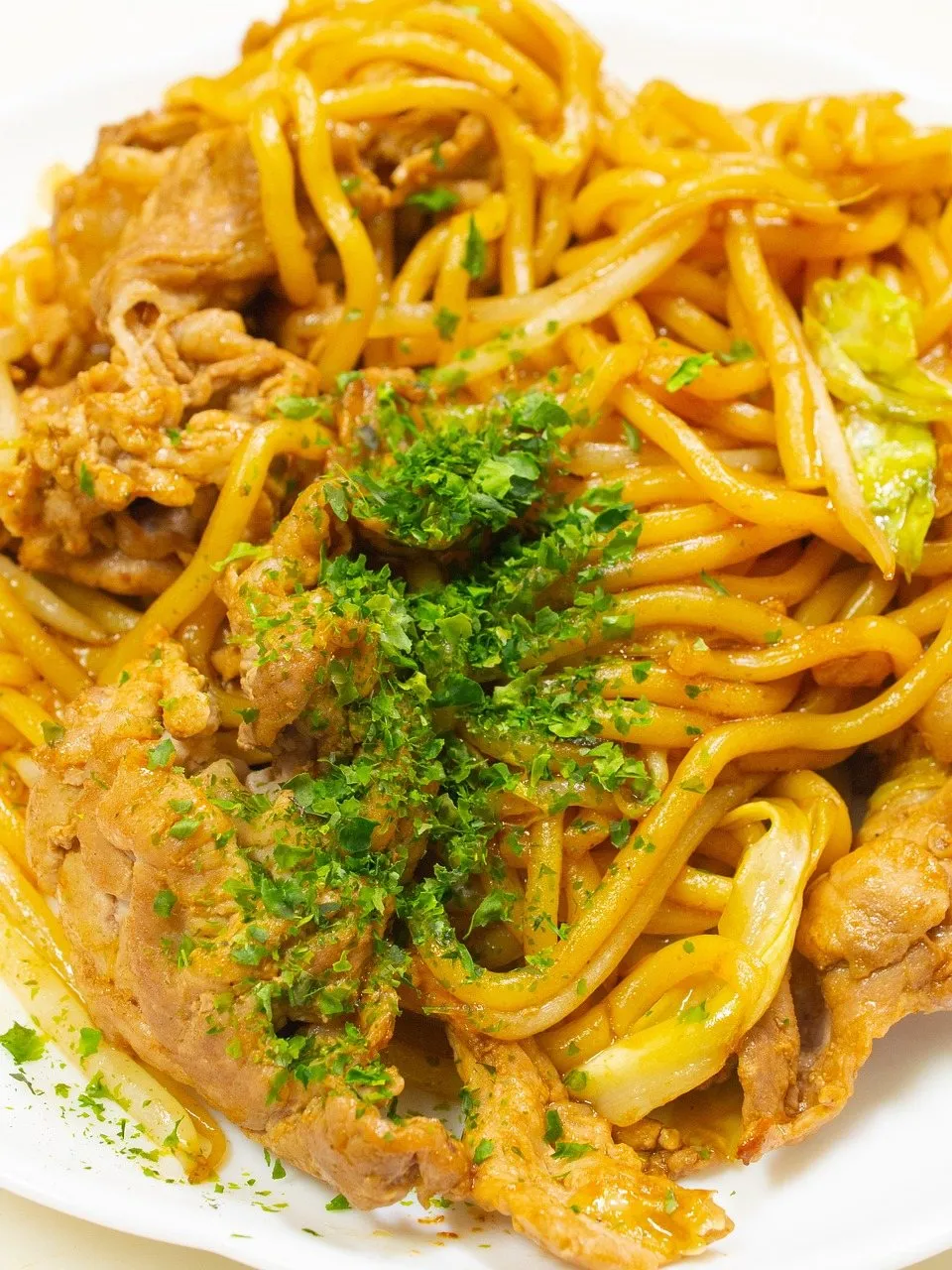
These are chewy noodles coated in a glossy sweet-savory sauce, with seared pork and soft-crisp cabbage in every bite, ready in 30 minutes from one skillet. The style comes from Japanese yakisoba, and the sauce uses bottles you probably already have: Worcestershire, oyster sauce, soy sauce and ketchup.
This version works because everything is cooked in stages in a very hot pan, so the pork browns instead of steaming and the noodles get a few toasty edges before the sauce goes in. Plan on 15 minutes of slicing and 15 minutes at the stove.
Why this recipe works
The sauce is the whole trick. Worcestershire brings tang and depth, oyster sauce adds body and gloss, soy sauce brings salt, and a spoonful of ketchup with a little sugar rounds it out so it clings to the noodles instead of pooling in the pan. Mixing it in a cup before you start means you pour once and toss, with no fumbling for bottles over high heat.
The second detail is cooking in batches. A 12-inch skillet can only brown so much at once. The pork goes in first, comes out, then the vegetables, then the noodles. Everything meets again at the end for one minute with the sauce, so nothing overcooks.
A teaspoon of cornstarch on the pork protects thin slices from drying out and helps the sauce stick. It's the same idea as velveting in a Chinese takeout kitchen, scaled down for a weeknight.
Ingredient notes
Noodles: fresh yakisoba or lo mein noodles from the refrigerated section are the closest match to the thick, chewy noodles in the photo. They usually come in 1-pound packs, sometimes with seasoning packets (toss those). Dried lo mein noodles or even spaghetti work too. Cook them 1 minute short of the package time, because they finish cooking in the pan.
Pork: boneless pork shoulder (butt) gives the most flavor and stays juicy. Boneless pork chops or pork loin are leaner and still good if you slice them thin and don't overcook them. Partly freezing the meat for 15 to 20 minutes makes 1/8-inch slices easy.
Cabbage: plain green cabbage is cheap, keeps for weeks and turns sweet when it hits the hot pan. A bag of coleslaw mix (about 14 oz) saves you the chopping.
Worcestershire sauce: any standard brand works. It's the ingredient that makes this taste like yakisoba instead of generic stir fry, so don't skip it.
Oyster sauce: it's in the Asian aisle of most US grocery stores. If you need a swap, see the substitutions below.
How to make stir fry noodles
Get everything sliced, the sauce mixed and the noodles loosened before you turn on the burner. Stir frying moves fast, and the pan needs your full attention once it's hot.
Sear the pork in a single layer over high heat and leave it alone for about 90 seconds so it browns. Stir and cook until no pink remains, then move it to a plate. Thin slices reach 145°F in 3 to 4 minutes total.
Next come the onion and carrot, then the cabbage. You want the cabbage wilted at the edges but still with some crunch in the thick ribs, about 3 minutes. Push the vegetables aside, add the noodles to the bare pan and let them sit for a minute to pick up a little color.
Return the pork, pour in the sauce and toss with tongs for 1 to 2 minutes until every noodle is coated and the sauce turns glossy and mostly absorbed. Add the bean sprouts and green onions in the last 30 seconds so they stay crisp.
Common mistakes (and how to fix them)
Gray, steamed pork: the pan wasn't hot enough or it was too crowded. Heat the oil until it shimmers, and if your skillet is smaller than 12 inches, sear the pork in two batches.
Noodles clumping into a brick: fresh noodles stick together straight from the package. Rinse them under hot tap water for 30 seconds or microwave the sealed pack for 1 minute, then pull them apart with your fingers before they go in the pan.
Mushy noodles: they were boiled too long before the stir fry. Undercook dried noodles by a minute and rinse them under cold water to stop the cooking.
Watery sauce at the bottom of the pan: the cabbage released liquid because it was crowded or cooked too long at lower heat. Keep the heat high and toss for another minute so the liquid reduces. A splash of water helps only if the noodles look dry and sticky, and 2 tablespoons is usually enough.
Too salty: a different soy sauce or oyster sauce brand can push it over. Use low-sodium soy sauce, and taste the mixed sauce before it goes in.
What to serve with stir fry noodles
It's a full meal on its own, but a fresh side balances the rich sauce. Try a smashed cucumber salad with rice vinegar and sesame oil, or steamed edamame with flaky salt. For a bigger spread, add a fried egg on top of each bowl or serve a pot of miso soup on the side. Frozen potstickers crisp up in another skillet while the noodles cook.
Tips for success
- Freeze the pork for 15 to 20 minutes before slicing. Firm meat is much easier to cut into thin, even slices.
- Use tongs, not a spatula, to toss the noodles. Lifting and turning coats them evenly without breaking them.
- If your stove runs weak, cook the vegetables in two batches so the pan stays hot.
- Taste before serving. A squeeze of lime or a dash of rice vinegar brightens the sauce if it tastes heavy.
- For heat, add 1 to 2 tsp sriracha to the sauce or finish with chili crisp.
Substitutions
- Chicken thighs: slice thin and use the same way, cooking until 165°F, about 4 to 5 minutes. Slightly milder flavor.
- Shrimp: use 12 oz peeled shrimp and cook just until pink and opaque, 2 to 3 minutes. Add them back at the very end so they don't turn rubbery.
- Ground pork or ground beef: brown 12 oz until it reaches 160°F, breaking it up, and drain the fat. Easier, but you lose the tender sliced texture.
- Vegetarian: replace the pork with 14 oz extra-firm tofu, pressed and cubed, seared until golden. Use vegetarian oyster sauce (mushroom-based) and check that your Worcestershire is anchovy-free.
- Gluten-free: use rice noodles or 100% buckwheat soba, tamari instead of soy sauce, and gluten-free oyster sauce and Worcestershire. Rice noodles are softer and less chewy.
- No oyster sauce: use 1 tbsp hoisin plus 1 extra tsp soy sauce. The sauce gets a little sweeter.
- No fresh cabbage: a 14-oz bag of coleslaw mix works and cooks in about 2 minutes.
Storage and reheating
Refrigerate leftovers in an airtight container within 2 hours of cooking and eat within 3 to 4 days. Reheat in a skillet over medium-high heat with 1 to 2 tbsp water, tossing until hot (165°F), or microwave covered in 1-minute bursts, stirring between. You can freeze it for up to 2 months, but the cabbage softens and the noodles get a little softer after thawing. Thaw overnight in the fridge before reheating.
Make ahead
Slice the pork and toss it with the soy sauce and cornstarch, mix the sauce, and chop the vegetables up to 1 day ahead. Keep each in its own covered container in the fridge. Dinner then takes about 15 minutes.
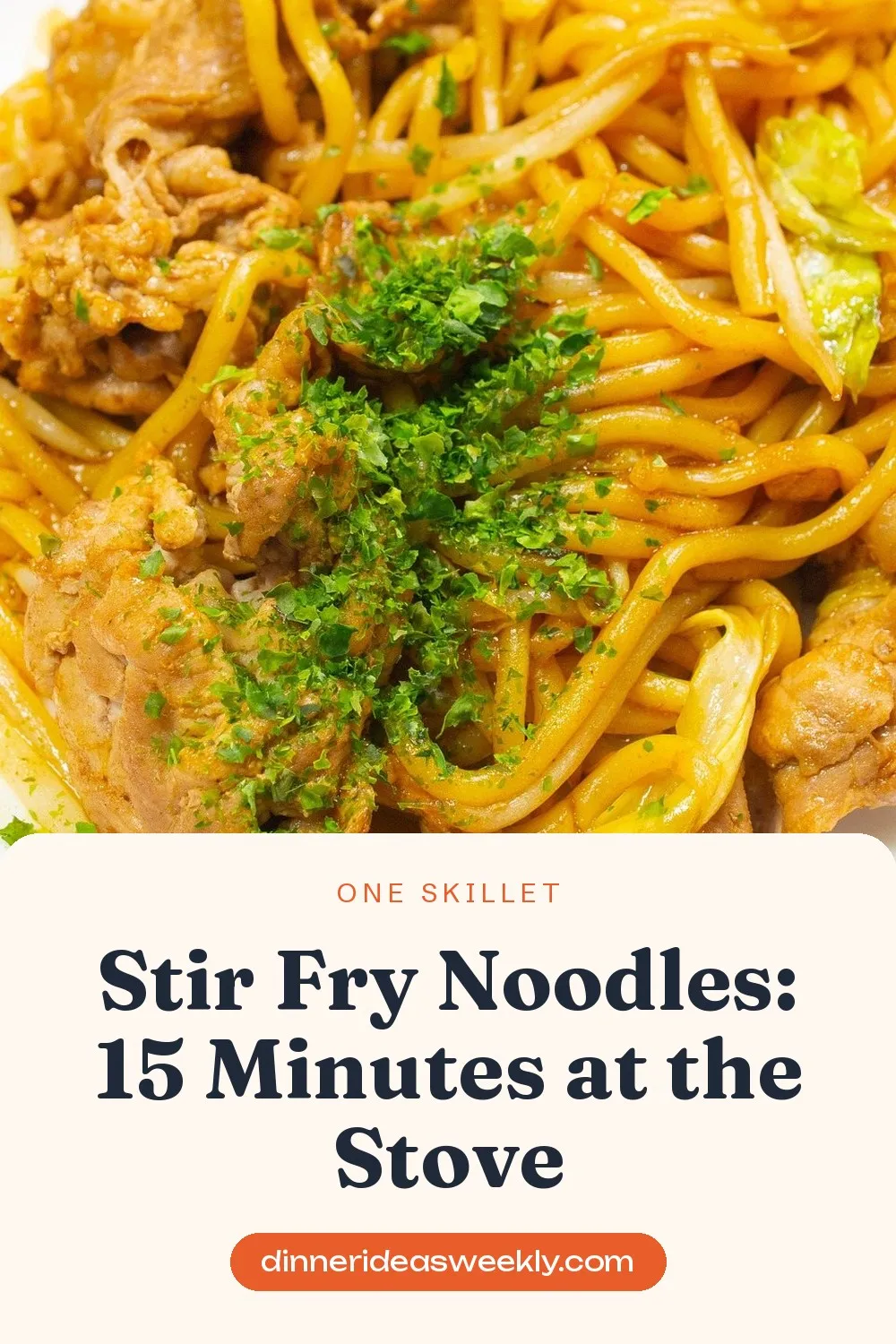
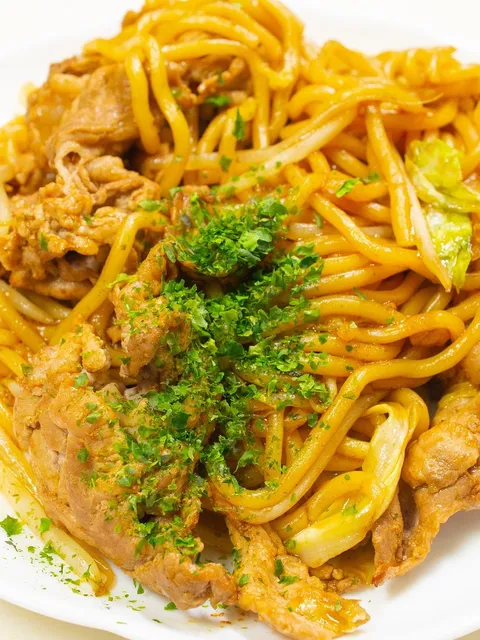
Stir Fry Noodles with Pork and Cabbage
Chewy noodles tossed with seared pork, sweet cabbage and a glossy Worcestershire-soy sauce. One skillet, 30 minutes, feeds 4.
- Prep
- 15 mins
- Cook
- 15 mins
- Total
- 30 mins
- Servings
- 4 servings
Ingredients
Instructions
- Toss the sliced pork with 1 tsp soy sauce and 1 tsp cornstarch in a bowl. Set aside while you prep everything else.
- Stir together the Worcestershire sauce, oyster sauce, 1 1/2 tbsp soy sauce, ketchup and sugar in a small cup until the sugar dissolves.
- Prepare the noodles. For fresh noodles, rinse under hot tap water for 30 seconds and loosen the strands with your fingers. For dried noodles, boil 1 minute less than the package says, drain, rinse under cold water and drain well.
- Heat 1 tbsp oil in a 12-inch skillet or wok over high heat until it shimmers. Add the pork in a single layer and cook without stirring for 90 seconds, until the undersides brown. Stir and cook 1 to 2 minutes more, until no pink remains (145°F). Transfer to a plate.
- Add the remaining 1 tbsp oil, the onion and the carrot. Stir fry 2 minutes, until the onion starts to soften and turn golden at the edges. Add the garlic and cook 30 seconds, until fragrant.
- Add the cabbage and stir fry 2 to 3 minutes, until it wilts at the edges but the thick pieces still have some crunch.
- Push the vegetables to the sides of the pan. Add the noodles to the center and let them sit 1 minute, then toss everything together.
- Return the pork and any juices to the pan. Pour the sauce over and toss with tongs for 1 to 2 minutes, until the noodles are evenly coated and the sauce turns glossy and mostly absorbed.
- Add the bean sprouts and green onions and toss 30 seconds, just until the green onions turn bright. Take the pan off the heat, sprinkle with parsley or aonori and serve right away.
Equipment
- 12-inch skillet or wok
- tongs
- pot for boiling (dried noodles only)
Nutrition (per serving)
- Calories
- 590 kcal
- Protein
- 28 g
- Carbs
- 72 g
- Fat
- 22 g
- Fiber
- 5 g
- Sodium
- 1150 mg
Nutrition values are estimates per serving and change with brands and portion sizes.
Dinner Ideas Weekly · https://dinnerideasweekly.com/blog/stir-fry-noodles
Frequently asked questions
What noodles are best for stir fry noodles?
Fresh yakisoba or lo mein noodles give the chewiest, most restaurant-like result. Dried lo mein noodles, ramen blocks without the seasoning packet, and spaghetti all work. Undercook dried noodles by a minute so they don't go mushy in the pan.
Can I use spaghetti for stir fry noodles?
Yes. Boil 12 oz spaghetti 1 minute short of the package time, rinse it under cold water and drain well. Adding 1 tbsp baking soda to the boiling water gives it a springier, more noodle-like chew.
How do I keep stir fry noodles from sticking together?
Loosen fresh noodles under hot water before cooking, and rinse boiled dried noodles under cold water to wash off surface starch. A hot, well-oiled pan and constant tossing with tongs once the sauce goes in does the rest.
Can I make stir fry noodles without a wok?
Yes. A 12-inch skillet works well, stainless steel, cast iron or nonstick. Cook the pork and vegetables in batches so the pan stays hot enough to brown instead of steam.
Can you freeze stir fry noodles?
You can freeze them for up to 2 months in a freezer bag. The texture softens after thawing, so they're best eaten within 3 to 4 days from the fridge. Reheat to 165°F with a splash of water.